From Flame to Switch: The Changing Shape of Domestic Light
Trace how domestic lighting changed from hearths and portable lamps to electric switches, and learn what fixture placement can teach you about a room.
Domestic lighting history is also a history of where people gathered, worked and placed their furniture. In many homes before electric lighting, a hearth supplied heat and some illumination, while candles and oil lamps brought smaller pools of light to particular tasks. Each source shaped the room differently because it had different limits.
The hearth made light a shared centre
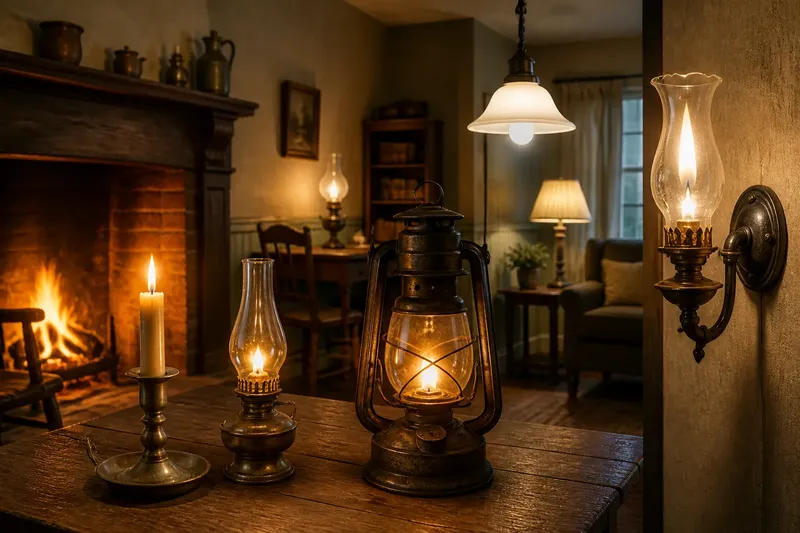
In homes that relied on an open hearth, the fire could provide heat, support cooking and illuminate the area around it. Its light was uneven: people nearby could see one another and work at close range, while corners and distant surfaces remained dim. Furniture and daily activity often gathered near the fire, though arrangements varied with the building, household and local custom.
Other flame-based lights extended illumination beyond the hearth. A rush dipped in fat, a candle or an oil lamp could be carried or set on a surface, but each lit a limited area. Their holders were shaped around the flame: a dish or reservoir for fuel, a stable support and sometimes a handle for moving the light. They also had to accommodate soot, spills, refuelling and the need to keep a flame away from nearby materials.
Light was therefore a local resource. Someone might bring a candle to a table rather than expect the whole room to be evenly lit. The position of the source could change with the task.
Portable lamps brought light close to household tasks
Candlesticks, lanterns and oil lamps addressed different practical needs. A candlestick could sit on a mantel or table; a lantern enclosed a flame for carrying or outdoor use; a wall-mounted sconce kept light near one part of a room without taking up a surface. These forms solved problems of support, movement, protection and placement as well as providing decoration.
Fuel lamps required attention. The user had to tend the flame and maintain its fuel. A lamp’s base and shade also affected where light went: a reflector could direct it towards a work surface, while a shade could shield the eyes or limit glare. The source remained a visible object occupying space.
Say a household needs to mend clothing after the hearth has burned low. Someone places an oil lamp beside the sewing chair. The expected result is better visibility at the needle and cloth, not uniform light throughout the room; distant corners remain comparatively dim.
Gas lighting tied fixtures to a fixed supply
Where gas networks reached homes, pipes supplied fuel to burners instead of requiring it to be carried in a vessel. Gas fittings needed a connection, a burner and a way to control the flow. Wall brackets and ceiling fittings could hold burners in place, while chandeliers offered several points of light from a fixed installation.
A gas burner could not simply be picked up and moved to another table. The planning question shifted from where to place a lamp for the evening to where a permanent light point would serve the room. A ceiling fitting could reach across an open area; a wall fitting might suit a passage, stair or regular work location. The fixture became part of the room’s infrastructure.
Gas did not remove the need to consider placement. A central fitting could leave a desk or reading chair poorly served, while a well-positioned wall light could support one activity without illuminating every corner.
Electricity separated the switch from the flame
Electric lighting changed daily use by allowing a switch to control light without tending a live flame. A bulb could sit inside a shade or fitting, and wiring connected the light point to the building’s electrical system. The fixture no longer needed to hold fuel or protect an open flame in the same way.
Early electric fittings often retained familiar forms. Ceiling pendants and chandeliers still hung above, while table and wall lamps kept their established roles. Shades and reflectors could shape comfort, direction and appearance. The switch made it easier to turn a room’s light on or off, but it did not ensure that every task received suitable illumination.
Multiple fittings and switches made it possible to light selected areas, depending on the home’s wiring and layout. The source was easier to control, but its position still determined where light fell.
What can domestic light history tell us about fixture placement?
What did a hearth do that a ceiling light cannot?
A hearth could gather people around a low, warm centre and encourage furniture to face inwards. A ceiling fitting may illuminate a broad area, but it does not recreate that social arrangement or provide the same source of warmth.
Why did candleholders and oil lamps stay near furniture?
They needed a stable surface or bracket, and their limited light was most useful close to the task. Their placement made a table, mantel or chair part of the lighting arrangement.
How did gas change the choice of fixture?
Gas connected a burner to a fixed supply, so fittings became more permanent and depended on pipe locations. Households had to consider which fixed positions would serve their regular activities.
What changed most with the electric switch?
Control became separate from tending a flame. A person could operate the light from a switch while the fixture stayed in place, with its shade or reflector shaping the light.
Historical fixture placement offers a useful way to plan a room
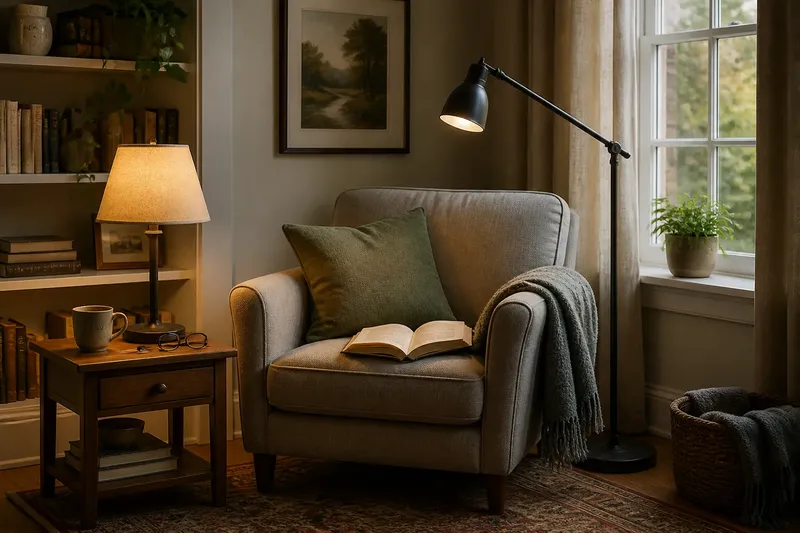
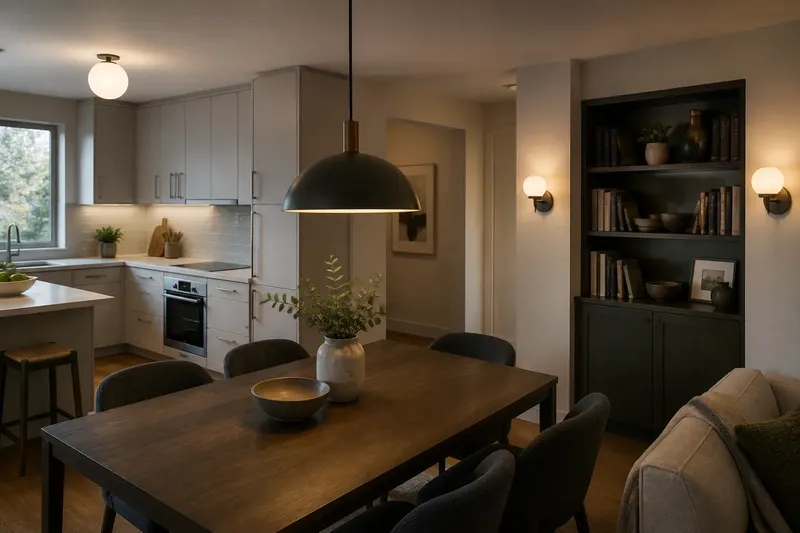
The historical account points towards a present-day planning question: where do people actually sit, read, prepare food or pass through? A ceiling fitting can provide general visibility, while a lamp near a regular reading chair can bring light closer to the task. In a hall or stair, a fixed fitting can serve a route rather than a tabletop activity.
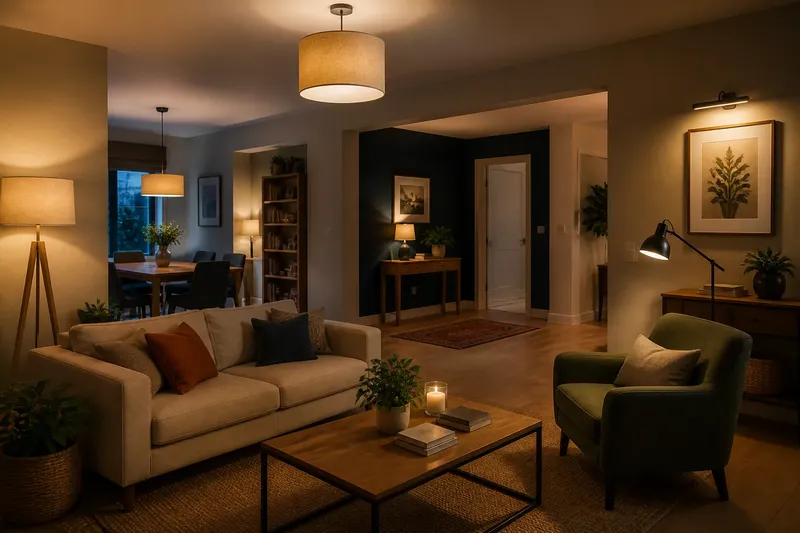
Imagine a household arranging a living room with a central ceiling pendant, a sofa beside a reading lamp and a clear route to the door. The starting point is a room used for gathering, reading and passing through. They keep the pendant for general visibility, place the lamp beside the sofa and check that the route remains unobstructed. The expected result is distinct light for the main activities, rather than an attempt to make one fixture serve every purpose.
What is not worth the effort is choosing an older-looking fixture solely for its appearance if its scale or direction does not suit the room. The useful legacy is the link between a light source and the activity it serves: flame encouraged people to gather close, portable lamps followed tasks, gas fixed the source in place and electricity made it easier to control. For decisions involving bulb compatibility or electrical installation, follow the maker’s instructions and local requirements, and consult a qualified electrician where needed.
When considering domestic light history, keep placement in view alongside the changing technology. Notice where people gather, read, work or pass through, then choose a fitting that serves that routine. The lasting lesson is that a light source changes a room most when its position supports an everyday activity.