A Winter Evening Reset for the Living Room
A winter evening living room lighting reset helps you make an inviting room feel calmer by matching lamp settings to the changing pace of an evening.
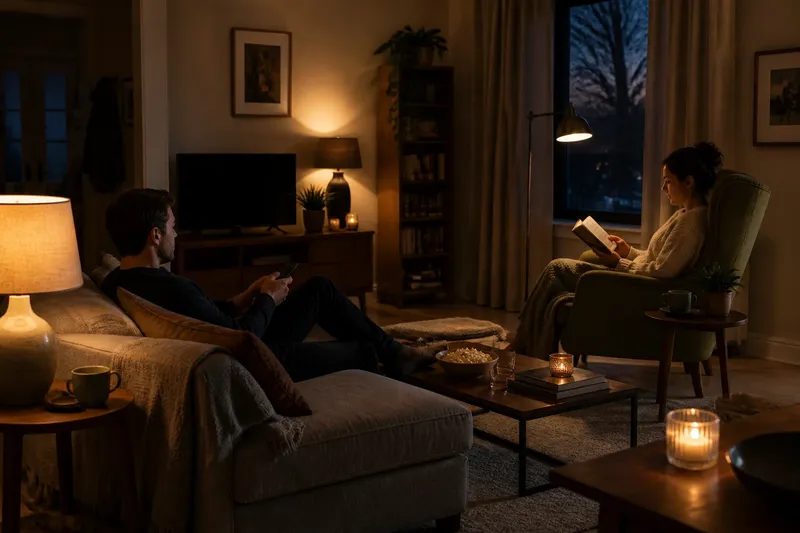
A winter evening living room lighting reset can make a familiar room feel calmer by changing how its lamps are used, rather than where they stand. As the evening shifts from conversation to a film or quiet reading, the room can feel too busy even when no particular spot is hard to see.
Start with the room’s rhythm: which lamps stay on, which are switched off, and whether the change between activities feels abrupt. The aim is not to make every corner equally bright, but to create a comfortable atmosphere that can shift with the evening.
Decide how the room should feel at each point in the evening
Think about the sequence of activities rather than inspecting each seat for a lighting fault. A living room might begin with people arriving and putting things down, move into conversation, then settle into television or reading. Each phase can call for a different combination of lamps.
Notice whether the room feels lively, restful or simply over-lit at each point. A row of lamps left on after guests have gone can make a quiet room feel exposed; switching everything off at once can make the change to a relaxed evening feel stark. A gentle transition often comes from turning off a source that is no longer useful while leaving one or two lamps on.
It is not worth trying to create a separate lighting arrangement for every small activity. Choose a few meaningful changes that match the way the household uses the room, then keep the switches easy to reach.
Build a simple sequence with the lamps already in the room
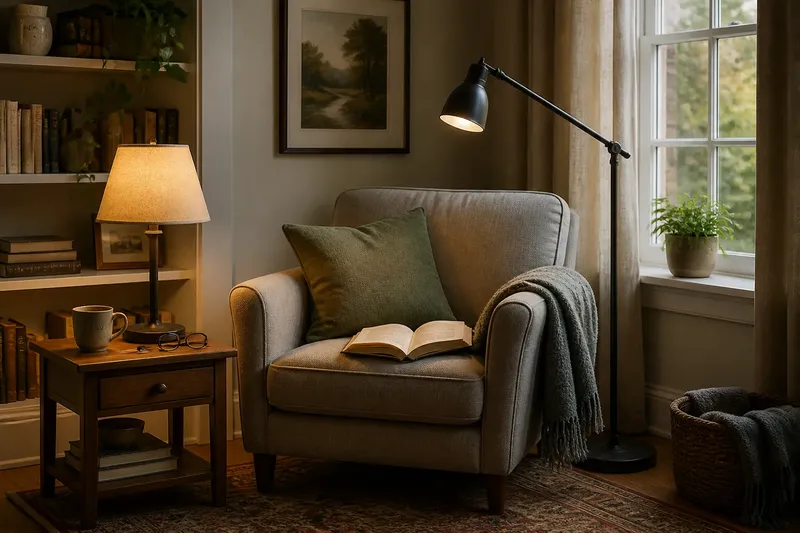
Make a mental note of which lamp belongs to each part of the evening. A table lamp near the sofa might stay on for conversation, while a floor lamp near a reading chair is switched on only when someone sits there. A lamp near a console may be useful while people come and go, but unnecessary once the room has settled.
For a simple reset, choose a starting arrangement, a quieter arrangement and an activity-specific option. The starting arrangement can include the lamps used while people are arriving. The quieter one can use fewer sources, and the activity-specific option can bring in a lamp only when someone needs it.
Leave room for personal preference. One person may find a low, softly lit room restful, while another wants a little more light to read or knit. Agreeing on which lamps can be switched independently makes those preferences easier to accommodate.
Use switching and dimming to soften transitions
Separate switches let one lamp be turned off without changing the whole room. If a lamp has a dimmer, lower its output gradually rather than making a sudden change from bright to dark. Not every bulb works with every dimmer, so check the bulb and dimmer instructions before using that combination.
Smart plugs or app-controlled bulbs can make a sequence easier to repeat, but they are optional. A simple habit—turning off the lamp used for arrivals and leaving the sofa lamp on—can work just as well. If a plug or bulb is controlled electronically, keep its usual wall switch in a position that allows the control to operate as intended.
For shared rooms, consider whether someone can change the lighting without interrupting another person. A switch beside the seat or a clearly named control can be more useful than a complicated routine no one remembers.
Choose a warmer mood without chasing a perfect match
Colour temperature describes whether light looks warmer and more amber or cooler and whiter. A warm-looking bulb can suit a quieter evening, while a cooler-looking source may feel more alert. The distinction is about appearance, not a promise that one colour will suit everyone.
When combining bulbs, avoid making matching shades a project in itself. A lamp used briefly near a doorway need not look identical to a table lamp that stays on through the evening. What matters is whether the overall room feels coherent to the people using it.
Do check bulb labels and fitting instructions before replacing anything, particularly where a dimmer or enclosed fitting is involved. If the compatibility is unclear, ask a qualified lighting professional or the manufacturer rather than guessing.
How can a living room shift from busy to restful?
Should I switch off all the lamps at once?
Usually, a gradual change feels less abrupt: turn off the lamps no longer serving an activity and leave a suitable source on. If the room still feels too bright, switch off another lamp and see whether the quieter arrangement suits everyone.
Can I leave one lamp on during a film?
Yes, if its light does not distract the people watching or reflect uncomfortably on the screen. Try a lamp outside the direct viewing area, then adjust the arrangement if anyone finds the screen harder to watch.
Do all the bulbs need to be the same colour?
No; bulbs can look different without making the room feel unsettled. If the contrast is distracting, replace or relocate the source that stands out most, while checking that any new bulb suits its fitting and controls.
What if someone wants to read while another person relaxes?
Use an independently switched lamp for the reader, leaving the rest of the room in its quieter setting. If that arrangement bothers the other person, try a different lamp or adjust the reading position and decide together which compromise feels comfortable.
Work through a realistic evening change
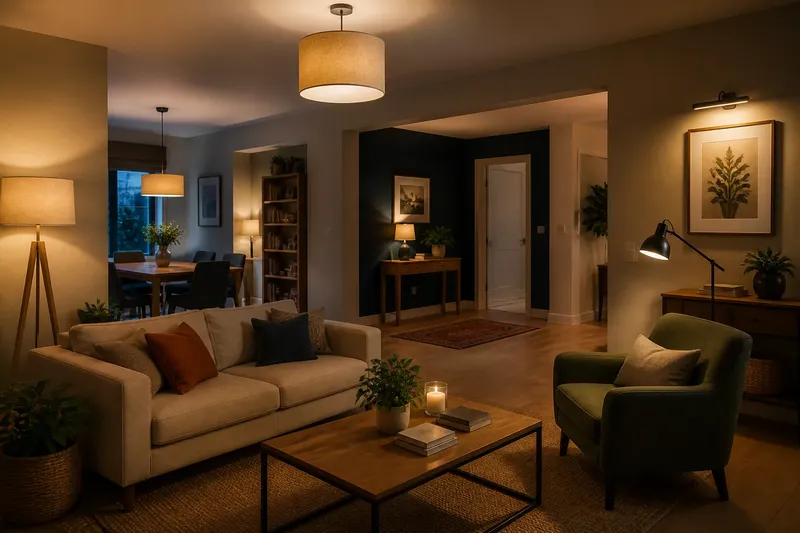
Imagine a living room has a ceiling light, a table lamp beside the sofa and a floor lamp by a reading chair. In this invented situation, the household uses all three while friends arrive, but later one person watches a film and another sits with a book. The ceiling light makes the film feel too bright, while switching off everything except the sofa lamp leaves the reader without a suitable source.
First, the household turns off the ceiling light after the visitors leave, keeping the sofa lamp on for the film. The reader then switches on the floor lamp independently. They check that the two activities can continue without either person wanting the other lamp changed; if the floor lamp distracts the viewer, they try another existing reading light or agree on a different activity arrangement.
The result is a simple sequence rather than a fixed rule: all three lamps for arrivals, a calmer pair for the film and reading, and fewer sources when the room is empty. The trade-off is that the reader’s lamp remains part of the shared room, so the household may need to choose a different setting when everyone wants the same quiet atmosphere.
Keep a short routine for recurring lighting decisions
- Check whether the room is being used for arrivals; if people are coming and going, use the familiar welcoming lamps, and if not, leave the arrival-only lamp off.
- Check whether anyone is reading or doing handwork; if so, switch on the lamp intended for that activity, and if not, keep it off to avoid unnecessary visual bustle.
- Check whether the television screen is uncomfortable to watch; if the lighting distracts from viewing, switch off or change the relevant lamp, and if it does not, keep the current setting.
- Check whether anyone prefers a quieter room; if the existing lamps feel too bright, turn off one independent source, and if the room then feels too dim for an active task, restore that source.
- Check whether a dimmer or smart control responds as expected; if it does not, consult the product instructions and use the ordinary switch meanwhile, and if it does, keep the chosen setting available.
- Check whether the room is empty; if it is, switch off lamps no longer needed, and if someone remains, leave on the source that suits their activity.
A winter evening living room lighting reset works best when the routine is easy to adjust, not when every switch follows a rigid schedule. Keep the settings that suit the household’s actual evening, and change them when the room’s use changes. A little flexibility matters more than matching bulbs or preserving a single arrangement all night.